Wine Cooler Not Cooling? A Troubleshooting Checklist
When a wine cooler stops getting cold, the cause is usually simple: a setting, a hot room, poor airflow or a leaky door. Work through the checks below in order, because they run from quickest to most involved. Most take a few minutes and need no tools.
If you have bottles you care about, move them somewhere cool and dark while you investigate.
Safety first: unplug the unit before you clean, vacuum or reach into any area near the fan, coils or wiring.
Start with power and settings
- Is the display lit and the interior light working? If not, check the outlet with a lamp, then check the breaker. Kitchen outlets are often GFCI outlets that can trip and need resetting.
- Most manuals ask you to plug directly into a grounded wall outlet, not an extension cord or power strip.
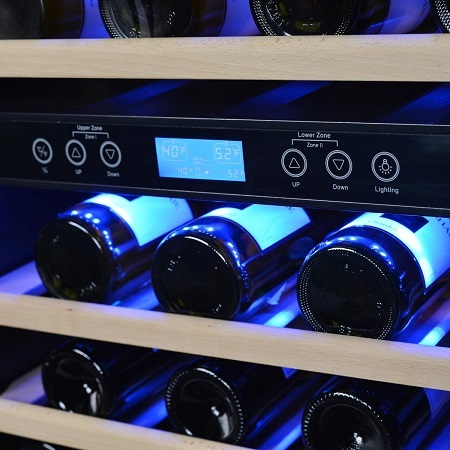
- Look at what the display is showing. Many units show the set temperature, not the actual temperature, unless you press a button. Check that it is not set to Celsius when you meant Fahrenheit, and that the set point is where you think it is.
- On dual-zone models, each zone has its own setting. It is easy to adjust the wrong one.
To check the real temperature, put a thermometer in a glass of water on a middle shelf and read it after several hours. The water smooths out the swings you would see in the air every time the door opens.
Check the room and the airflow
Room temperature, especially for thermoelectric units
A thermoelectric cooler does not have a compressor. It can only pull the inside temperature down a certain amount below the room around it, and manufacturers usually rate that limit somewhere around 20°F or so. In a 78°F (26°C) room in summer, a thermoelectric unit may simply be unable to reach 55°F (13°C).
Compressor coolers handle warm rooms better, but every unit has an ambient range listed in its manual. A cooler in a hot garage, a sunny window or next to an oven can run constantly and still fall short. If yours only struggles in summer, the room is the likely culprit. See thermoelectric vs compressor wine coolers for how the two types differ.
Blocked vents and clearance
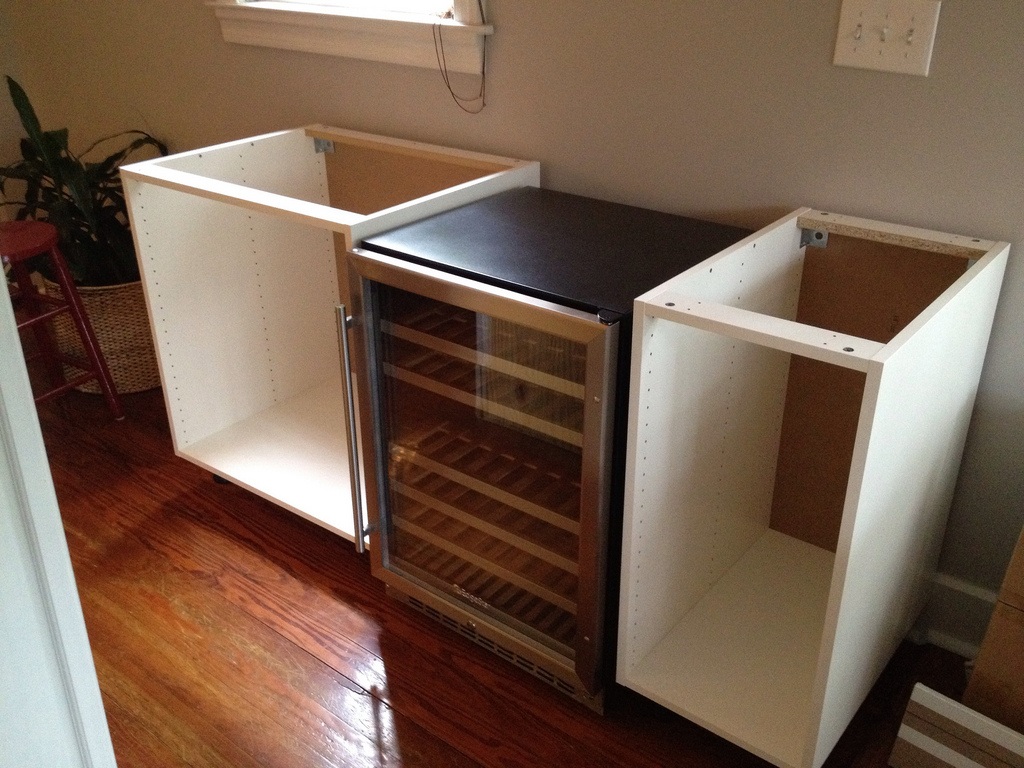
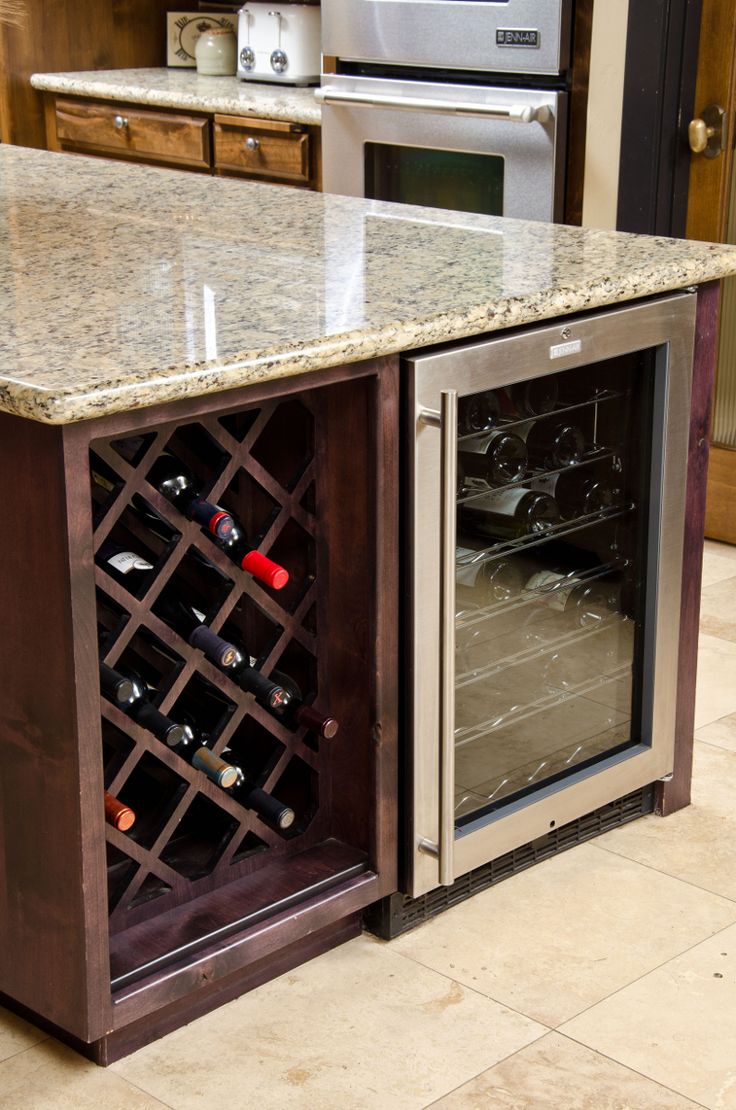
Every wine cooler has to dump heat somewhere. Rear-venting (freestanding) units push it out the back and sides, so they need open air around them. Front-venting units are designed to vent through a grille at the bottom front, which is why they can be built into cabinetry.
Check that:
- The unit is not pushed tight against a wall. Manuals usually call for a few inches of space behind and beside a freestanding cooler; check yours for the exact figure.
- Nothing is blocking the front grille on a built-in model, such as a rug, a kick plate or a stack of cases.
- A freestanding model has not been slid into a cabinet opening, a common reason a cooler overheats and falls behind. Built-in vs freestanding wine coolers explains why.
Check the door and what is inside
The door seal
A door that does not seal lets warm air in all day. Try the paper test: close the door on a sheet of paper or a dollar bill, then pull it out. You should feel some drag. If it slides out freely, the gasket is not sealing at that spot. Repeat on all four sides and the corners.
Common fixes: wipe the gasket clean (sticky residue and dust stop it from seating), make sure the unit is level so the door closes on its own, and check that a bottle or shelf is not sticking out and holding the door open. A torn or flattened gasket can usually be replaced as a part.
Too much, or too warm, in at once
If you just loaded a case of room-temperature bottles, the cooler has a lot of heat to remove. It can take several hours, sometimes a full day, to recover. That is normal.
Overpacking causes a different problem. Bottles jammed against the back wall or the fan can block airflow, leaving warm pockets. Leave a little space around the fan and the back panel.
Look for ice and listen to the fans
Frost or ice
A thin layer of frost that comes and goes on the back wall of some compressor models is part of the normal cycle. A thick, growing sheet of ice is not. It insulates the cooling surface so the cooler works harder and cools less.
Heavy ice usually points back to a poor door seal or a door that is opened often in humid weather. Unplug the unit, prop the door open, let the ice melt on its own with a towel underneath, and dry the interior. Do not chip at it with anything sharp. If the ice returns quickly after you have fixed the seal, there may be a defrost or control fault that needs service.
Fan noise or a fan that is not spinning
A thermoelectric unit typically has one fan inside and one outside, and if either stops, cooling drops sharply. Many compressor models also have a condenser fan and sometimes an interior fan.
With the unit unplugged, look for anything caught in the blades, such as a label or dust buildup. A fan that buzzes, rattles or will not spin once power is restored usually needs replacing.
Clean the condenser coils on compressor models
On compressor coolers, the condenser coils release heat. When they are coated in dust or pet hair, they cannot do that well, and the compressor runs longer to achieve less. Depending on the model, the coils sit at the back or behind the front grille. Unplug the cooler and clean them gently with a vacuum brush attachment or a soft coil brush.
When to call for service
If you have checked everything above and the cooler still runs warm, or if the compressor never seems to start or you smell something burning, stop and call for service. Refrigerant leaks and failed compressors or control boards are not DIY repairs.
Look up your warranty before you book anyone. Coverage varies by brand, and some manufacturers cover the sealed refrigeration system for longer than the rest of the unit. Then have the model and serial number ready, along with your glass-of-water readings and a note of what you already checked. That short list can save a technician time and save you a second visit.