Single Zone vs Dual Zone Wine Coolers
If you mainly store wine to age or to drink over the coming months, a single zone cooler is enough, because all wine stores best at about the same temperature. A dual zone cooler earns its extra cost when you want bottles ready to pour at two different serving temperatures, such as whites chilled and reds slightly cool, or when you want one section for storage and another for serving.
Storage Temperature and Serving Temperature Are Different Things
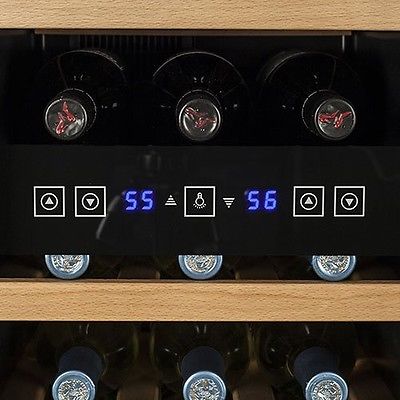
This is the point that often gets blurred. Red, white, rosé and sparkling wines are all served at different temperatures, but for long-term storage the common advice is the same for every style: around 55F (13C), kept steady, in the dark.
Serving temperatures spread out much more widely. Common ranges look like this:
- Sparkling wine: about 40 to 50F (4 to 10C)
- Light whites and rosé: about 45 to 50F (7 to 10C)
- Fuller whites: about 50 to 55F (10 to 13C)
- Light reds: about 55 to 60F (13 to 16C)
- Fuller reds: about 60 to 65F (16 to 18C)
There is more detail in our guide to the best temperature to serve wine. The takeaway for buying a cooler is simple. A collection kept at 55F only needs one zone. A cooler that holds wine at drinking temperature needs at least two.
When a Single Zone Is the Right Choice
A single zone cooler has one temperature for the whole cabinet. Set it to around 55F and everything inside ages under the same conditions. When you want a bottle of white for dinner, pull it out and give it some time in the kitchen fridge. When you want a red, pull it out a little while early and let it warm up on the counter.
Single zone makes the most sense if:
- most of your bottles are being kept for weeks, months or years
- you mostly drink one style, for example mostly reds
- you want the most bottle space for your money
When Dual Zone Helps
A dual zone cooler splits the cabinet into two compartments, each with its own temperature setting. Two common ways people use them:
- Serving-ready reds and whites. Set one zone around 45 to 50F for whites and sparkling wine and the other around 60 to 65F for reds. Whatever you pull out is ready to pour.
- Storage plus serving. Keep the larger zone at 55F for the bottles you are holding on to and set the smaller zone colder for the whites or sparkling wine you plan to open soon.
If you entertain often or drink a real mix of styles, dual zone saves you the habit of planning a bottle hours ahead. If you keep Champagne on hand, a colder zone also helps; see how to store Champagne.
How the Zones Are Laid Out
Dual zone coolers come in two main layouts:
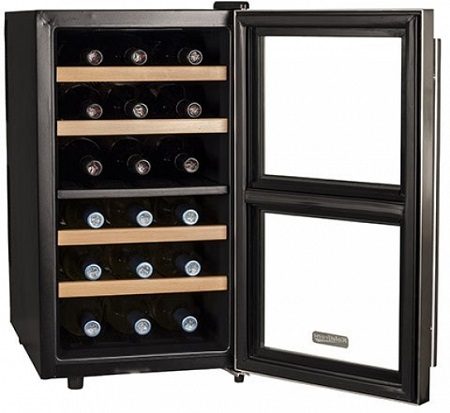
- Top and bottom. One zone sits above the other, divided by a shelf panel. This is the most common layout in narrow and freestanding units, like the one pictured above.
- Side by side. Two separate cabinets share one case, each with its own door and display. This is common in wider units.
Which zone runs colder varies by brand, and the zones are rarely equal in size. One might hold two thirds of the bottles and the other a third. Each zone also has its own allowed temperature range, so check both ranges in the specs. Some smaller models cannot set their two zones very far apart, which limits how useful the second zone really is.
Cost and Capacity Trade-offs
Dual zone adds a divider, extra controls and often a second fan or cooling circuit, so it usually costs more than a single zone cooler of the same size. The divider and its insulation also take up room, so a dual zone model can hold fewer bottles than a single zone model with the same outside dimensions.
Bottle counts deserve a second look either way. Manufacturer capacity figures are usually based on slim Bordeaux-style bottles, and wider Burgundy, Champagne or Riesling bottles take more space. Our guide to wine cooler bottle capacity explains how to estimate what will actually fit.
If you are on the fence, think about how you actually drink. If most bottles are opened within a week or two of buying them, dual zone is worth it. If most of them sit for months, buy the largest single zone cooler that fits your space, and keep a spot in the kitchen fridge for chilling a white an hour or two before dinner.